|
Course Details |
|
|
|
|
Certificate in MANUAL THERAPY |
|
|
|
Participants who attend this certificate Program
will be a CERTIFIED MANUAL THERAPIST from the MFSMT,
and this certificate is valid worldwide. |
|
|
This is an
integrated Course of all the 5 courses listed below. |
|
|
|
|
|
 |
|
|
|
|
|
Course 1 |
|
|
|
|
|
Maitland's
Concept of JOINT MOBILIZATION & MANIPULATION WITH
CLINICAL REASONING |
|
|
(Vertebral and Peripheral) |
|
|
|
|
|
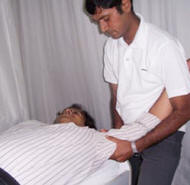 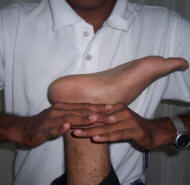 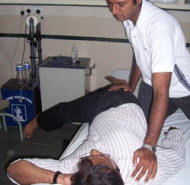 |
|
|
These practical oriented workshops are specially
designed integrated courses, based on the original
teachings of Geoffrey
D Maitland, Mark Jones and
David Butler |
|
|
These courses cover Maitland’s concept of Vertebral
and Peripheral joint mobilization right from the
basics, through effective examination and advanced
manual therapy techniques in a simplified and easily
understandable format which helps in enhancing the
skills of Musculoskeletal and Manual
physiotherapists with effective diagnosis and
treatment of a variety of acute and chronic joint
disorders such as PA shoulder, Lateral
Epicondylalgia, Knee OA, Facet Joint Syndrome,
Discogenic problems, Joint related referred pains,
Spondylosis, Arthritis, etc |
|
|
These Workshops are ideal
for 7th / 8th semester or 4th
year BPT students, interns, post-graduation students
and currently practicing Physiotherapists who are
willing to be efficient and enhance or consolidate
their practical Manual therapy skills. |
|
|
All participants attending this course will receive
2 ‘Certificates’ from “Maitland’s Foundation for
Sports and Manual Therapy”, along with course
manuals. |
|
|
|
|
|
The topics covered curing these workshops are: |
|
|
|
|
|
¨
Principles of ‘Clinical
Reasoning’ and their
Clinical application. |
|
|
¨
Introduction to the
Maitland’s Concept. |
|
|
¨
The
Maitland’s Concept and
Grades of movement. |
|
|
¨
Principles of effective assessment with Clinical
Reasoning: Subjective
and Physical Examination. |
|
|
¨
Mechanical Vs Inflammatory presentations. |
|
|
¨
Principles of ‘Severity’
and ‘Irritability’. |
|
|
¨
Planning the physical
examination – how not to provoke pain but
still assess and treat the joint dysfunction. |
|
|
¨
PPIVMs (Passive
Physiological Intervertebral movements):
Cervical, Thoracic and Lumbar Spine. |
|
|
¨
PAIVMs (Passive Accessory
Intervertebral Movements): Cervical
spine, Thoracic spine and Lumbar spine. |
|
|
¨
Passive Physiological
Movements: Shoulder complex, Elbow
complex, Wrist and Hand, Hip, Knee complex, Ankle
and Foot, SIJ. |
|
¨
Passive Accessory movements:
Shoulder Complex, Elbow Complex, Wrist and Hand,
Hip, Knee complex, Ankle and Foot, SIJ. |
|
¨
Combined
movements. |
|
¨
Understanding and estimating
Prognosis. |
|
¨ Principles
of Treatment: Selection and progression
of mobilization / manipulation techniques. |
|
¨
Treatment options
beyond ‘joints’. |
|
¨
Simulated
patient examples and case scenarios,
SUPERVISED PRACTICE. |
|
If you want to register
your interest to become a Course host or organizer
or participant for this course, or for further details,
|
|
Please visit |
: |
www.mfsmt.org |
|
Email to |
: |
mfsmtfoundation@gmail.com |
|
|
: |
mfsmtfoundation@yahoo.com |
|
|
|
|
|
|
|
|
|
|
|
|
|
Course 2 |
|
|
|
|
CLINICAL NEURODYNAMICS –
Upper Quarter |
|
CLINICAL NEURODYNAMICS –
Lower Quarter |
|
|
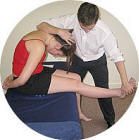
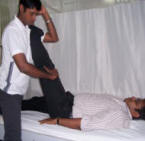
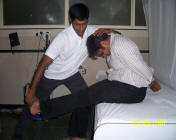 |
|
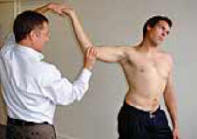
‘Clinical Neurodynamics’ is a vastly emerging
concept and offers solutions to many commonly
encountered painful musculoskeletal and neural
disorders such as Carpal tunnel syndrome, Sciatica,
Pyriformis syndrome, Thoracic outlet syndrome,
peripheral nerve root pain, Heel pain, muscular achy
pains, etc. This full-time practical oriented course
is a specially designed integrated hands-on course
based on the original teachings of
Michael Shacklock
and offers latest evidence-based information on
neural mobilization in a simplified and easily
understandable format. |
|
All participants
attending this course will receive 2 ‘Certificates”
from “Neurodynamic Solutions”, Adelaide, Australia
along with Course manuals.
|
|
(These Certificates and
Course Manuals are prepared and certified by Michael
Shacklock (NDS) himself, and will be the same ones
which Michael gives to all the participants who
attend the NDS courses worldwide) |
|
All the participants who attend this workshop will
be enrolled for free “NEWSLETTERS’ through E-mail
from Neurodynamic Solutions (NDS). |
|
These Workshops are
ideal for 7th / 8th semester
or 4th year BPT students, interns, post-graduation
students and currently practicing Physiotherapists
who are willing to be efficient and enhance or
consolidate their practical Manual therapy skills. |
|
|
|
The topics covered curing these workshops are: |
|
¨
The
concept of Neurodynamics
and
Neurodynamic sequencing. |
|
¨
The
phenomenon of
Convergence. |
|
¨
Effect of
bilateral neurodynamic
testing on neurodynamics – SLR and Upper limb
neurodynamic tests, Slump test and SLR. |
|
¨
Specific Neurodynamics
of the Lumbar spine and lower quarter. |
|
¨
Neuropathodynamics
– expanding the boundaries and classification of
different dysfunctions. |
|
¨
Neurodynamic testing
– MNT1, MNT2, RNT, UNT, RSNT and sensitization; SLR,
Clump, PKB, Femoral slump, Obturator slump, Peroneal,
Sural and Tibial neurodynamic tests and
sensitization techniques. |
|
¨
Planning the physical
examination – how not to provoke pain but
still treat the neurodynamic component. How to
sensitize the examination and treatment for hidden
neurodynamic problems, Level 1, 2 and type 3a, 3b,
3c, 3d and 3e examinations. |
|
¨ Diagnosis
of neurodynamic tests – differentiating
neural tissue from neuromusculoskeletal tissues,
establishing what is normal and abnormal. |
|
¨ Classification
and diagnosis of specific dysfunctions –
sliding dysfunction, tension dysfunction,
pathophysiological dysfunction, mechanosensitivity
dysfunction, mechanical interface dysfunction,
hyperactivity protective muscle dysfunction,
innervated tissue dysfunctions. |
|
¨ Method
of treatment –
system of technique progression, hypersensitivity
problems, hidden neural component and sensitized
examination, from Level 1 to 3c for the Lumbar nerve
root foraminal opening and closing dysfunctions,
neural tension dysfunction. |
|
¨ Treatment
progressions – Cervical nerve root
foraminal opening and closing dysfunctions, neural
tension dysfunction, combined neural tension and
reduced closing dysfunctions (level/type 3c),
thoracic outlet syndrome treatment combinations,
medial and lateral elbow pain, carpal tunnel
syndrome, neural tension dysfunction, specific
neural sliding dysfunctions, pyriformis syndrome
treatment combinations, heel pain syndrome and
posterior tibial nerve disorders, peroneal and sural
nerve disorders, specific neural sliding
dysfunations. |
|
If you want to register
your interest to become a Course host or organizer
or participant for this course, or for further details,
|
|
Please visit |
: |
www.neurodynamicsolutions.com |
|
|
: |
www.mfsmt.org |
|
Email to |
: |
mfsmtfoundation@gmail.com |
|
|
: |
mfsmtfoundation@yahoo.com |
|
|
|
|
|
|
|
|
|
|
|
Course 3 |
|
SOFT TISSUE ASSESSMENT AND TREATMENT |
|
|
|
 |
|
v
Mechanical, Physiological, Psychological &
Therapeutic effects of different soft tissue
treatment approaches.
v
Soft tissue assessment.
v
Muscle Stretching.
v
Massage
& Components of Massage.
v
Understanding different
types of Massages:
●
Recreational Massage.
●
Therapeutic massage.Muscle stretching.
●
Sports massage, Pre-event & Post-event massage.
●
Facilitatory / Excitatory massage.
v
Different Soft-tissue treatment Approaches:
●
Trigger point therapy.
●
Myofascial Therapy, Myofascial manipulations, Direct
release myofascial techniques.
●
Muscle Energy Techniques.
●
Proprioceptive (PNF) soft-tissue treatment,
Integrated Neuromuscular inhibition techniques.
●
Deep frictions.
v
Therapeutic
& Reflex effects
of different Soft tissue treatments.
v
Referred Pain pattern
mechanisms.
v
Clinical Decision-making
& Selection
of appropriate treatment approach.
v
Treatment Progression
from safe & simple method to highly aggressive
soft-tissue treatment rechniques.
v
Specific Soft-tissue treatments for specific areas:
Trunk, Upper limb & Lower Limb.
v
Treatment approaches for different conditions:
PA Shoulder, Tennis Elbow, Carpal Tunnel Syndrome,
Postural Syndrome, Muscle cramps, Low back ache,
Cervicogenic headache, etc.
v
Supervised PRACTICE, Patient examples.
|
|
|
|
|
|
If you want to register
your interest to become a Course host or organizer
or participant for this course, or for further details,
|
|
|
|
|
|
Please visit |
: |
www.mfsmt.org |
|
Email to |
: |
mfsmtfoundation@gmail.com |
|
|
: |
mfsmtfoundation@yahoo.com |
|
|
|
|
|
|
|
|
|
|
|
|
|
Course 4 |
|
PAIN SCIENCE & CHRONIC PAIN MANAGEMENT |
|
|
|
 |
|
v
Physiological basis
of Chronic Pain from a Physiotherapist’s
perspective. |
|
v
History of ‘Understanding
pain’ and
limitations of
the Current concepts
( Mind-Body theory, Pain-Gate Control theory, etc).
|
|
v
“Pain-Pathology”
relation. |
|
v
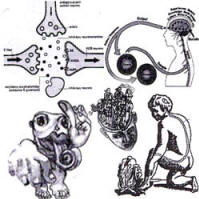
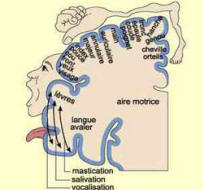
“PAIN-BRAIN” relationship
theories
(Molecular Theory, Homoncular Theory, Neuroendocrine
Theory). |
|
v
“Psychological
pain” Vs “Central
sensitivity”.
|
|
v
Understanding the “Placebo
effect”. |
|
v
Treatment options
for Chronic Pain.
|
|
v
Active Treatment Vs
Passive Treatment. |
|
|
|
These Workshops are ideal
for 7th / 8th semester or 4th
year BPT students, interns, post-graduation students
and currently practicing Physiotherapists who are
willing to be efficient and enhance or consolidate
their practical Manual therapy skills. |
|
If you want to register
your interest to become a Course host or organizer
or participant for this course, or for further details,
|
|
|
|
|
|
Please visit |
: |
www.mfsmt.org |
|
Email to |
: |
mfsmtfoundation@gmail.com |
|
|
: |
mfsmtfoundation@yahoo.com |
|
|
|
|
|
|
|
|
|
|
|
Course 5 |
|
|
|
|
CLINICAL REASONING |
|
|
  |
|
v
Stages
of Clinical Reasoning. |
|
v
The
Critical Thinking
process. |
|
v
Reasoning the
Anatomy, Physiology,
Biomechanics
and Pathology
for a patient’s presentation. |
|
v
Principles of ‘Effective
Subjective Examination’. |
|
v
Principles of
Physical Examination. |
|
v
Estimating
Prognosis. |
|
v
Principles of ‘Treatment
selection’ and
‘Treatment
progression’. |
|
v
Understanding the concepts
of ‘irritability’,
‘Stage’,
‘Stability’
and ‘Severity’. |
|
v
Interlinking the Patient presentation with
Theoretical knowledge. |
|
v
Understanding the types of
Disorders. |
|
v
Systematic formation of ‘Hypothesis’
for a patient presentation. |
|
v
Clinical Reasoning with a
Patient example. |
|
|
|
These Workshops are ideal
for 7th / 8th semester or 4th
year BPT students, interns, post-graduation students
and currently practicing Physiotherapists who are
willing to be efficient and enhance or consolidate
their practical Manual therapy skills. |
|
|
|
If you want to register
your interest to become a Course host or organizer
or participant for this course, or for further details,
|
|
|
|
Please visit |
: |
www.mfsmt.org |
|
Email to |
: |
mfsmtfoundation@gmail.com |
|
|
: |
mfsmtfoundation@yahoo.com |
|
|
|
|
|
|
Our Global Partner
Neurodynamic
solutions (NDS), Adelaide, Australia.

 |
|
www.neurodynamicsolutions.com |
|